Refund Your Premier League Ticket: 4 Official Club Policies
£30. That is the maximum an away supporter will pay for a Premier League match ticket since the Away Supporters' Initiative took effect in the 2016/17 season.
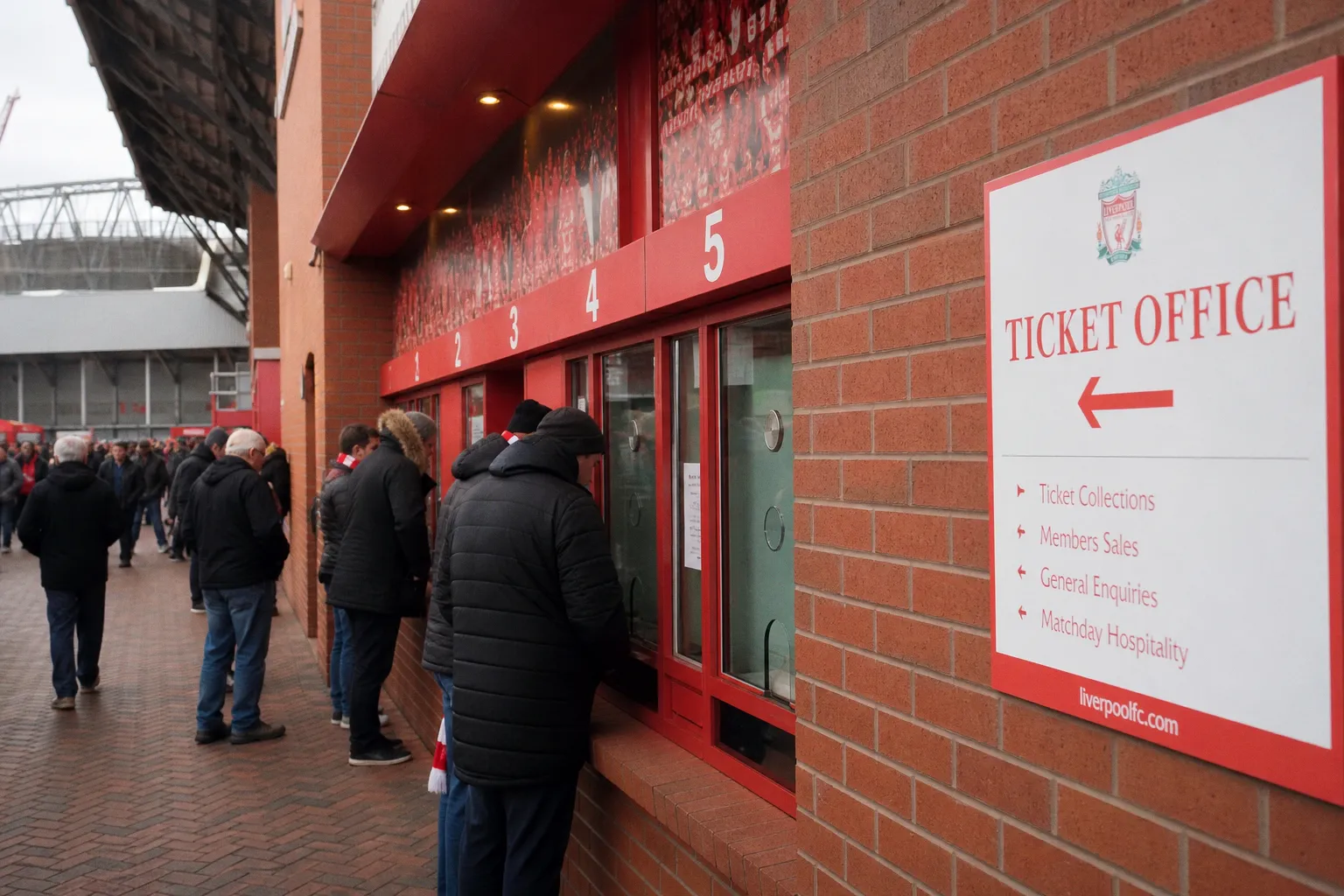
The Myth of a Universal Premier League Refund Policy
For Fantasy Premier League managers who allocate real money to real seats — a cohort that exists in a strange overlap between spreadsheet discipline and matchday commitment — this creates a structural vulnerability. You plan your season around fixtures. You buy tickets in advance. Then a match shifts for broadcast scheduling, a weather event, or a policing decision, and you discover that your club's refund mechanism operates on a logic you never examined when you clicked "Confirm Purchase."
This is a navigation guide, not a sympathy letter. Four policy zones define the refund terrain across the Premier League: rescheduled and abandoned fixtures, hospitality versus general admission terms, the cooling-off window, and the away cap's interaction with resale restrictions. Walk through each one, and you will know precisely where your money sits.
---
Decoding Your Club's Terms and Conditions of Issue
Every Premier League club publishes a document called the Terms and Conditions of Issue. It is attached — usually as a hyperlink buried in the checkout flow — to every ticket transaction. Most fans scroll past it. That scroll costs them leverage later.
The core structure is consistent across clubs, even if the specifics diverge. Three clauses matter above all others:
1. The non-transferability clause. Tickets are issued to a named individual and cannot be resold, gifted, or exchanged outside the club's official platform. Violation can result in the ticket being voided without refund.
2. The postponement clause. If a match is rescheduled, the ticket remains valid for the rearranged date. The holder must attend the new fixture or forfeit the ticket's value. Refund eligibility, if it exists, is conditional: the club requires notification within a defined window — typically 14 days from the announcement of the new date, though this varies.
3. The cancellation clause. If the fixture is abandoned or cancelled outright, a full refund of the face value is standard practice. Arsenal and Liverpool, among others, make this explicit in their published policies.
The trap for the uninformed: "non-refundable" does not mean "never refundable." It means the default position is no refund — but exceptions are coded into the same document. The match must fall into a specific category (rescheduled, abandoned, cancelled), and the holder must act within the specified timeframe. Passive inaction, waiting to "see what happens," is the mechanism by which most fans lose their money.
The ticket is non-refundable by default. The exception requires you to move within 14 days — or forfeit the entire face value.
---
Navigating Refunds for Rescheduled or Abandoned Fixtures
The Premier League reschedules matches constantly. Broadcast selections move Saturday 3pm kickoffs to Sunday midday slots. European fixtures compress domestic calendars. FA Cup replays displace league matches entirely. The frequency of these changes is a defining feature of the modern schedule, with a significant number of fixtures moved from their originally published date for broadcast purposes alone each season.
For the ticket holder, the mechanism splits into two distinct paths:
Rescheduled matches. Your ticket transfers to the new date automatically. If you cannot attend, you must contact the club's ticket office within the window specified in the Terms and Conditions. Most clubs operate a 14-day notification period from the date the rescheduling is announced — not from the original match date, and not from the date you happen to check your email. Miss that window, and the ticket's face value is gone.
Abandoned or cancelled matches. Full refund, 100% of face value. This is the closest thing to a universal rule in Premier League ticketing. Arsenal's policy states it explicitly. Liverpool's does the same. The refund is processed to the original payment method, and the club initiates it without requiring the fan to take action in most cases — though confirming with the ticket office is never wasted time.
The practical step most fans skip: logging into the club's ticketing portal and checking the match status individually. Clubs do not always send proactive notifications about postponements, especially late-stage broadcast changes announced within a week of the fixture. Your confirmation email is not the source of truth. The club's fixtures page is.
| Scenario | Default Outcome | Action Required | Refund Eligible? |
|---|---|---|---|
| Match rescheduled | Ticket valid for new date | Notify club within 14 days if unable to attend | Conditional — depends on timeframe and club policy |
| Match cancelled | Ticket voided | None (auto-refund standard) | Yes — 100% face value |
| Match abandoned (in-play) | Case-by-case | Contact ticket office | Partial or full — varies by club |
| Fan-initiated cancellation | Non-refundable | N/A | No |
The abandoned-match row deserves attention. When a match is stopped mid-play — for crowd trouble, a medical emergency, or severe weather — the club's obligation to refund is not as clean-cut as a pre-match cancellation. Some clubs offer a full refund; others apply a partial credit depending on how much of the match was completed. The Terms and Conditions of Issue will govern this, but the language is often ambiguous enough to require direct contact with the ticket office.
---
Distinguishing Between General Admission and Hospitality Refund Rights
This is where the policy architecture forks sharply. General admission tickets and hospitality packages operate under different contractual terms, even when sold by the same club for the same fixture.
General admission. Standard terms apply: non-transferable, non-refundable by default, with exceptions for rescheduling and cancellation as outlined above. The cooling-off period — typically 14 days from purchase — gives the buyer a window to cancel without penalty for any reason, provided the match is more than 14 days away. This mirrors consumer contract regulations, though clubs implement it inconsistently. Some embed the cooling-off clause in the Terms and Conditions; others reference it only in the FAQ section of their ticketing site.
Hospitality. The terms are more restrictive and the financial stakes are higher. A hospitality package — which bundles the seat with dining, lounge access, and sometimes parking — can cost anywhere from £250 to over £1,000 per person. Refund policies for these packages often require significantly more notice. Where a general admission ticket might allow cancellation up to 14 days before the match, hospitality packages sometimes require 28 or even 30 days. Some clubs treat hospitality bookings as non-refundable from the moment of purchase, with no cooling-off period at all, because the service element (catering, staffing) is committed in advance.
Hospitality and general admission live in parallel contractual universes. One follows consumer ticketing norms; the other borrows from events-hospitality law. Know which one you signed.
The data point that matters for Fantasy FPL players who invest in live attendance: if you are buying a hospitality ticket as a one-off experience — a birthday, a corporate gesture — read the cancellation terms before you pay. The Premier League's general framework does not mandate a cooling-off period for hospitality bookings the way it structures away ticket pricing. Clubs have wider discretion here, and they use it.
For those seeking broader context on how consumer rights intersect with event-based purchases beyond football, Haber Tarz offers coverage of practical lifestyle and consumer guidance that touches on similar territory.
---
The Away Supporters' Initiative and Its Effect on Refund Calculus
Since the 2016/17 season, the Premier League's Away Supporters' Initiative has capped away ticket prices at £30. This is not a suggestion — it is a binding condition of the league's operating framework. Every club must comply.
The cap changes the refund equation in a specific way. Because the maximum financial exposure for an away ticket is £30 (plus a small booking fee), the cost of a lost refund — while irritating — is bounded. Compare this to a home ticket in the same fixture: a seat in the lower tier at Old Trafford or the Emirates can run £55–£75, and premium seats exceed £100. The refund gap between "filed within 14 days" and "missed the window" is therefore proportionally smaller for away supporters.
But the cap introduces its own complications. Away tickets are the most tightly controlled segment of Premier League ticketing. They are allocated through the visiting club's loyalty point system, sold to named individuals, and strictly non-transferable. If you purchase an away ticket and cannot attend the rescheduled fixture, your options are narrow:
1. Request a refund through the visiting club's ticket office within the notification window.
2. Forfeit the £30 and accept the loss.
There is no legal resale market for away tickets. There is no official exchange. The visiting club's allocation is ringfenced, and any attempt to transfer the ticket outside the club's own platform risks voiding it entirely — no refund, no entry.
---
What This Means for the FPL Manager Who Also Attends Matches
The intersection of Fantasy Premier League strategy and live attendance is underexplored. FPL managers who also buy tickets occupy a dual role: they are optimizing squad selection based on fixture difficulty, injury news, and expected points — while simultaneously managing real-money commitments to specific matches.
When a fixture shifts, both systems are affected. Your FPL transfer strategy might benefit from a fixture moving to a later gameweek, giving a key player more recovery time. But your ticket for that match now sits in limbo, subject to whichever refund policy your club enforces.
The disciplined approach:
- Bookmark your club's Terms and Conditions of Issue. Not the FAQ. The actual legal document. It is usually 8–12 pages and contains the exact notification window for rescheduled-match refunds.
- Set a calendar reminder for 14 days from any announced fixture change. Even if your club uses a different window, 14 days is the most common threshold and a safe operational default.
- Do not assume the club will contact you. Broadcast changes are published on the Premier League's website and through club channels, but ticket-holders are not always individually notified.
- Treat hospitality as a separate contract. If you are buying a hospitality package, read the specific hospitality terms — do not apply general admission assumptions to a £500 purchase.
The Premier League's ticketing ecosystem rewards those who treat it as a system — with inputs, conditions, and deadlines — rather than a passive purchase. Twenty clubs, twenty sets of rules, one consistent principle: the refund is there if you move on time.