Select Between Zonal and Man-Marking to Stop Set Pieces
Set pieces are where tidy defensive plans can turn messy very quickly. One blocked runner, one mistimed jump, one defender caught watching the shirt instead of the ball, and suddenly the match…
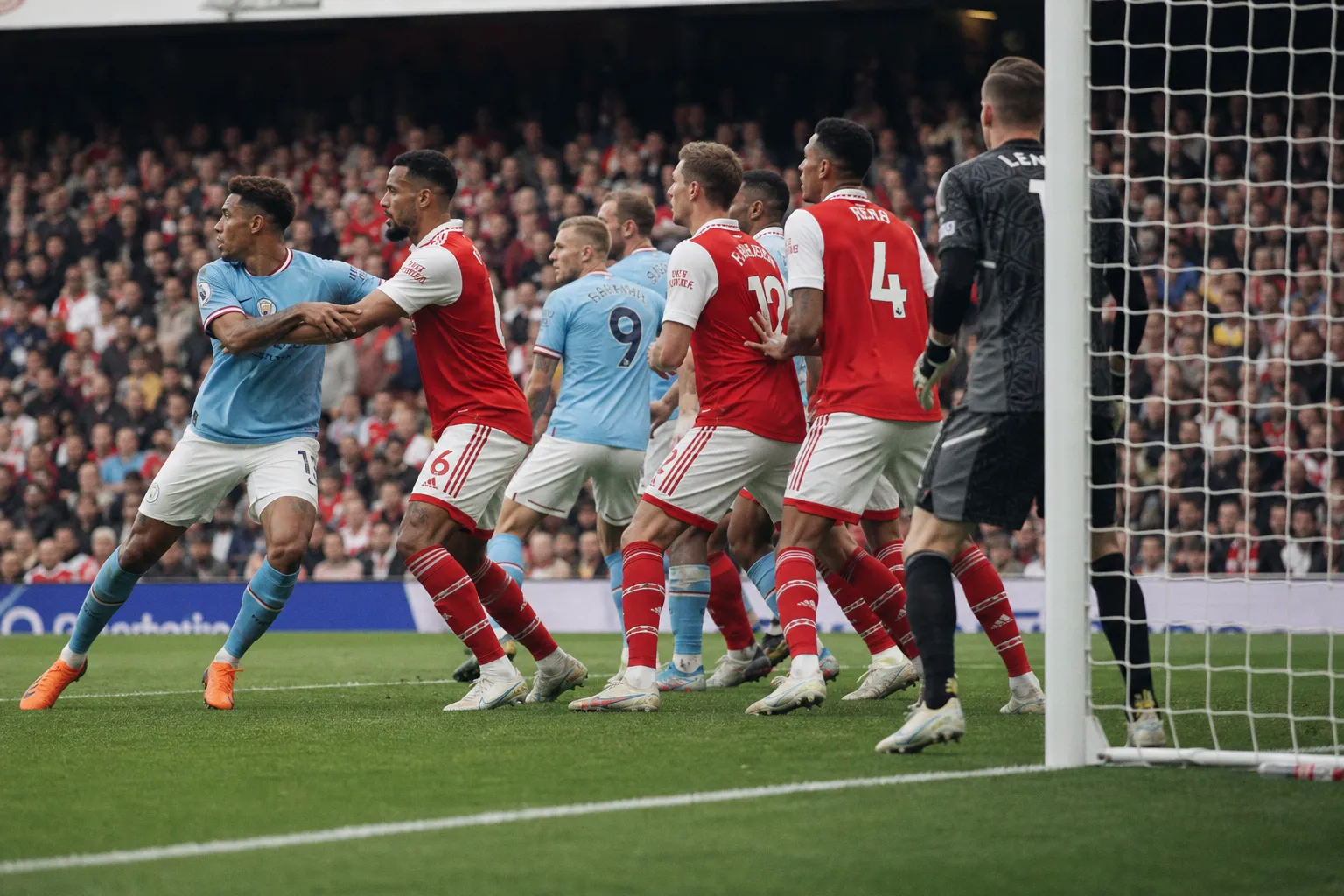
Set pieces are where tidy defensive plans can turn messy very quickly. One blocked runner, one mistimed jump, one defender caught watching the shirt instead of the ball, and suddenly the match analysis is less about open-play control and more about why nobody attacked the near-post delivery.
So when coaches — and, let’s be honest, plenty of us watching with a tactical notebook in one hand and FPL anxiety in the other — ask how to select between zonal and man-marking to stop set pieces, the honest answer is not “pick the modern one”. It is: look at the ball, look at your defenders, look at their runners, then decide which risks you can actually live with.
There is no universal winner here. Zonal marking gives you spatial control and usually cleaner attacking of the ball. Man-marking gives you accountability and a clearer answer to the question, “Who lost him?” But elite sides increasingly live in the middle, using hybrid schemes because attackers have become too good at turning pure systems into stress tests.
The mechanics of spatial control: why zonal marking starts with the ball
Zonal defending is often described badly. It is not players “marking grass”, and it is not passive by design. Done well, it is a way of making sure your best headers defend the most valuable spaces, rather than being dragged into traffic by decoy runs.
The core idea is simple enough: defenders occupy zones, usually with a line of protection close to the six-yard box and often another layer around the 10–12-yard area. Their job is to attack the delivery at its highest point — the apex — rather than chase a runner from a standing start. That distinction matters.
If the ball is whipped into the six-yard corridor, a zonal defender already stationed there should have the advantage. He can step, jump and clear. He does not need to wrestle through a screen or track a looping run around the penalty spot. This is why zonal systems often produce higher clearance rates: the structure is built around the flight of the ball rather than the movement of each attacker.
For teams with dominant aerial defenders, this can be very efficient. You put your strongest centre-back in the zone where the delivery is most likely to arrive. You place another good header across the central lane. You protect the goalkeeper’s route, or at least try to stop it becoming a rugby maul. Some sides add one or two players on the posts for goal-line coverage, though that choice has its own trade-off because it can reduce pressure on second balls.
The obvious weakness is timing. Zonal systems can leave blind spots between zones if defenders hold their line too rigidly or fail to communicate. Attackers are not static. They curve runs, delay runs, start from offside-looking positions before dropping back onside, or arrive from behind the defender’s shoulder. A player attacking a gap at pace can beat a zonal marker who is flat-footed, especially if the delivery is accurate and the goalkeeper is pinned.
That is where the eye test helps. If your zonal line is clearing first contact repeatedly, the setup is probably doing its job even if it looks a little chaotic. If opponents are arriving unchallenged between two defenders, the issue is not “zonal marking” as a concept; it is spacing, communication, or personnel.
Zonal defending works when players own the space, not when they merely stand in it.
For fantasy managers, this is also where we should be careful with lazy narratives. A team conceding from one corner does not automatically become “bad at set pieces”. Watch the pattern. Are they losing first contact every week? Are they conceding big chances from the same delivery type? Are full-backs being asked to defend prime zones against bigger forwards? That is the sort of detail that actually helps when we weigh clean-sheet odds or target attackers with strong aerial threat.
Individual accountability: why man-marking still has a place
Man-marking is the more intuitive system. Each defender gets a player. Track him, block his run, compete at the point of contact. If he scores, everyone knows where the mistake happened.
That clarity is useful, especially against opponents with one or two obvious aerial threats. If you are facing a centre-back who attacks the far post every week or a striker who lives for near-post darts, assigning a physically matched defender can reduce the danger. It stops the most dangerous attacker from getting a free run into your best zone.
There is a psychological edge too. Some defenders like the duel. They want the shirt number, the shoulder contact, the direct responsibility. In a high-pressure match, that can simplify the task. No scanning five bodies and a curling delivery at once. Just stay with your man and win the first contact.
But the risks are equally clear. Man-marking can turn defensive corners into a series of tiny races, and attackers usually know the route first. They can start in clusters, split late, or use “pick” and “block” actions to slow markers down. If a defender gets caught behind a screen, even for half a second, the attacker has the separation he needs.
There is also the foul risk. Man-marking naturally creates more contact: holding, grabbing, leaning, wrestling for position. Referees do not give every penalty — we all know the weekly variance there — but the system invites more judgement calls. Statistical analysis has consistently pointed to man-oriented setups being more likely to concede fouls or penalties because of that physical contact.
Here is the practical trade-off:
| Parameter | Zonal marking | Man-marking |
|---|---|---|
| Main strength | Controls the most dangerous spaces and helps defenders attack the ball cleanly | Gives clear responsibility for specific aerial threats |
| Main weakness | Can leave gaps between zones if spacing or communication breaks down | Vulnerable to blocks, screens and late separation |
| Best suited to | Teams with strong aerial defenders and clear box organisation | Teams facing one or two dominant individual runners |
| Typical risk | Free runner attacking a blind spot | Defender impeded or dragged into contact |
| Referee exposure | Generally less holding if executed cleanly | Higher chance of fouls through grappling and shirt pulls |
| Coaching demand | Coordination, spacing and communication | Match-ups, tracking discipline and physical duels |
The key is not whether a system feels braver or more traditional. It is whether the players can execute it under contact, with a noisy box, against a delivery that may be flat, outswinging, inswinging or deliberately hung under the goalkeeper.
Countering the block: the man-marking problem attackers love
If you want the quickest way to test a man-marking system, watch the first two seconds after the taker begins the run-up. That is where the attacking work often happens.
The “block” or “screen” is now one of the main counter-measures against man-to-man defending. An attacker does not need to rugby-tackle anyone. He just needs to occupy a defender’s path, step across his line, or create enough traffic that the marker cannot stay attached to the runner. The best attacking units choreograph this carefully: one player runs across the near-post lane, another checks towards the penalty spot, the main target loops behind them.
From the defensive angle, it looks like bad marking. From the attacking angle, it is design.
This is why pure man-marking can look fine for 70 minutes and then collapse from one corner. It only takes a single blocked route. If the marker has to go around bodies while the attacker takes a direct line, the duel is already tilted. When the delivery is accurate, especially into the 10–12-yard zone where runners can generate power, the defending side is no longer competing on equal terms.
Teams try to solve this in a few ways:
1. Switching before contact. Defenders pass runners on when the attacking team creates a cluster. This can work, but only if the communication is sharp. If two defenders follow one runner and nobody takes the second, the chance is gift-wrapped.
2. Starting deeper. Markers give themselves room to see both the runner and the ball. The downside is that the attacker may still build momentum while the defender retreats or turns.
3. Using blockers against blockers. A defender positions himself to disrupt the attacking screen before it develops. This can be effective, though it also risks adding even more bodies into the goalkeeper’s space.
4. Moving to a hybrid. Keep zonal players in the prime areas, then assign man-markers only to the biggest threats. This is where many Premier League sides have landed, because it reduces the damage one screen can cause.
There is a neat crossover here with how we consume the wider matchday noise. We can get stuck reacting to one replay, one pundit line, one freeze-frame. I find it healthier to treat set-piece analysis like any other practical reading of the game: gather the pattern, not just the clip. That same habit applies beyond football too; when you are looking for broader updates away from the pitch, a general news and lifestyle digest such as Nevla News works best when you read it for context rather than one isolated headline.
The hybrid model: where elite teams usually settle
The modern default is not pure zonal or pure man-marking. It is the hybrid.
Typically, that means a zonal block in or around the six-yard box, with three or four man-markers assigned to the most dangerous attacking players outside or around that protected area. The zonal players defend the ball. The man-markers disrupt the runners most likely to attack it. One or two players may be stationed on the posts, depending on the coach’s preference and the opponent’s delivery profile.
This approach recognises a simple truth: set-piece defending is not one problem. It is several problems arriving at once.
You need to protect the goalkeeper. You need to win first contact. You need to stop the best header getting a clean leap. You need to defend the second ball. You need to avoid giving away a penalty while doing all of that. A hybrid system spreads those jobs more realistically.
For example, against a side with a high-quality inswinging delivery and two powerful centre-backs, a coach might place the best aerial defender centrally in the six-yard zone, another across the near-post lane, then use man-markers on both centre-backs. The aim is not to eliminate risk — good luck with that — but to make the attacking side beat both the space and the matchup.
Against an opponent that prefers outswingers towards the penalty spot, the zonal line may sit closer to the 10–12-yard range, with blockers ready to contest the first wave of runs. Against a team that crowds the goalkeeper, the defending side may prioritise a stronger six-yard box shield and ask a spare player to screen the keeper’s path.
This is where the phrase “how to check select between zonal and man-marking to stop set” — awkward as it sounds — actually points us to the right process. We are not choosing an identity. We are checking conditions.
The five checks that matter before choosing the setup
1. Where does the opponent’s best delivery land?
Near-post whip, back-post float, penalty-spot outswinger and goalkeeper-crowding inswinger all ask different questions. Do not defend a reputation; defend the actual ball they deliver.
2. Who are the real aerial threats?
Sometimes it is the obvious centre-back. Sometimes it is the third runner, the striker peeling onto a full-back, or the midfielder attacking from deep. The danger is not always the tallest player.
3. Can your defenders win stationary duels or moving duels?
Some centre-backs are brilliant attacking the ball from a set zone. Others are better when locked onto a runner. Full-backs and midfielders matter here too because mismatches often appear away from the headline duel.
4. How much contact will the referee allow?
We cannot build a plan around complaining after the whistle. If the official is punishing holding early, heavy man-marking becomes a bigger risk. That is match management, not paranoia.
5. What happens after the first clearance?
A set piece is not over when the first ball is headed away. If your zonal structure leaves nobody ready for the edge-of-box rebound, you may solve one problem and create another.
The best set-piece plans are not the neatest on the whiteboard; they are the ones that survive traffic.
Personnel decides more than ideology
Coaches may have preferred principles, but personnel usually makes the final call. That is the part we should keep coming back to, whether we are analysing a Champions League knockout tie or deciding if a budget defender is worth starting in FPL this week.
A team with two dominant centre-backs, a commanding goalkeeper and disciplined midfield blockers can run a zonal-heavy scheme with confidence. They can protect the six-yard box, attack the apex, and trust their structure to handle most deliveries. If the full-backs are undersized, the coach can keep them away from direct aerial matchups and use them for posts, edge coverage or short-corner protection.
A smaller side, or one missing its best aerial defender, may need more man-oriented assignments simply to stop elite runners getting clean access. That comes with the foul and block risk, but it may still be the better compromise. Again, this is not about perfect. It is about choosing the least damaging weakness.
Injury context is huge. Lose your best set-piece organiser and the same scheme can look completely different. We see this often when a team’s open-play numbers remain stable but their dead-ball defending wobbles. The missing player may not just be a header of the ball; he may be the one who shouts the line up, spots the spare runner, or tells the full-back when to switch.
That is also why substitutions can quietly change the set-piece equation. A late defensive midfielder coming on for a winger may strengthen second-ball coverage. A young full-back replacing a senior centre-back may force a shift from zonal control to more direct matching. These details rarely dominate the post-match quotes, but they can decide a result.
For fantasy purposes, we can translate this into practical signals without pretending we are inside the coaching room:
- If a team repeatedly concedes first contact from corners, their defensive structure is a concern even if the goals have not arrived yet.
- If they allow shots from the same zone every week, opponents have likely found a pattern.
- If they change goalkeeper or centre-back pairing, be cautious with clean-sheet assumptions for at least a match or two.
- If an upcoming opponent has elite delivery and multiple aerial targets, downgrade the defence slightly unless the defending side has shown strong set-piece control.
- If your attacker is the designated near-post runner or back-post target, his appeal rises against teams vulnerable to those specific zones.
That is not overcomplicating things. It is simply refusing to treat all corners as equal.
The verdict: choose the risk you can manage
If we are making the call in plain terms, here is where I land.
Use a zonal-heavy structure when your defenders are strong attacking the ball, your goalkeeper needs protected lanes, and the opponent’s threat is more about delivery into dangerous areas than one unstoppable runner. It gives you control of the six-yard box and usually a better chance of clean first contact.
Use man-marking more aggressively when the opponent has specific aerial monsters who cannot be allowed a free run. Accept that you will need to coach around blocks, switches and foul risk. The duel may be necessary, but it cannot be naive.
Use a hybrid when you are facing a serious set-piece side — which, at elite level, is most weeks. Keep the zonal block where goals are most often made, assign three or four markers to the runners who can hurt you most, and make sure someone is responsible for the second ball.
The real mistake is treating zonal versus man-marking as a culture war. It is a matchup decision. The best coaches are not trying to win an argument on terminology; they are trying to stop the next delivery from becoming a shot on target.
For our purposes, whether we are reading a tactical trend or making a deadline call, the question is always the same: what does this team protect, what does it leave open, and does the opponent have the tools to punish that space? Answer that, and the set-piece picture becomes a lot less noisy.