Napoli football stadium tour: Key highlights and access details
If you've ever wondered what it's like to step inside the home of SSC Napoli, here's the honest answer first: there isn't a regular, officially-run interior tour of Stadio Diego Armando Maradona you can simply book and walk through.
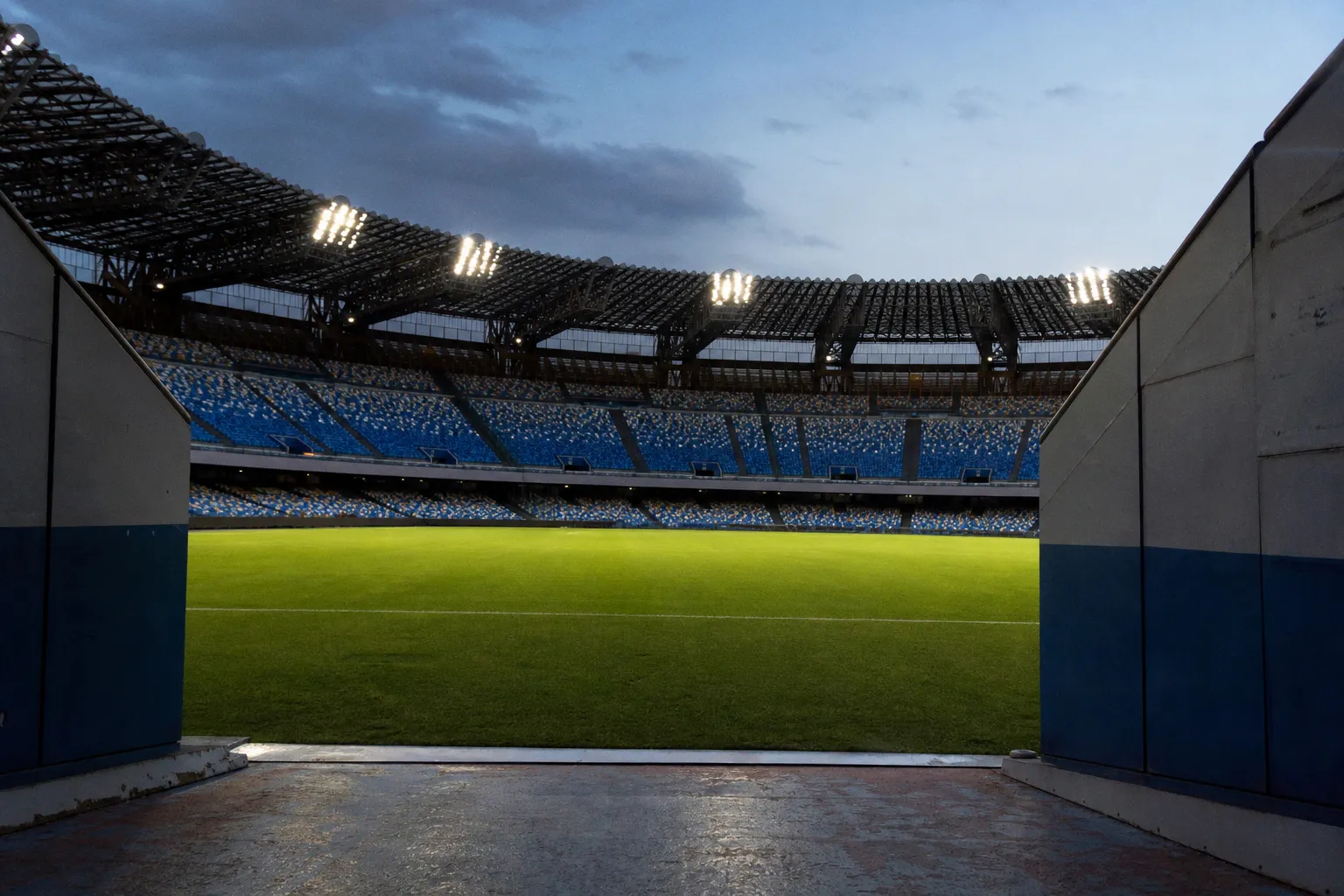
The club's online presence is built around match tickets, accessibility arrangements and travel information, not a scheduled stadium experience. What you can reliably find, especially heading into the 2025/26 season, is a different kind of visit — one that starts outside the stadium rather than behind its dressing-room doors.
That distinction matters more than it sounds. A "Napoli football stadium tour" can mean very different things depending on who's selling it: a third-party walking tour of the exterior, a separately ticketed exhibition experience, or simply matchday access if you hold a ticket. Before you book a flight, sort out a transfer from the airport or start hunting for "Napoli stadium visit tickets," it's worth understanding what each option actually delivers. We're going to walk through the reality of access, the transport picture, matchday logistics and the cultural weight of the Maradona legacy, so you can plan a trip that matches what you actually want to see.
The reality of stadium access: Beyond the pitch
Let's start with the most important point, because it shapes every other decision. SSC Napoli does not currently publish a regular, scheduled behind-the-scenes tour. We checked the club's own pages, and what you'll find there is the stadium's history, the address, how to get there by rail and car, and the formal accessibility procedure for home matches — but no tour timetable, no standard ticket price and no guaranteed itinerary. If you see a listing promising dressing-room, tunnel or pitch access, treat it with caution.
What the market does offer is an outdoor walking tour run by a local operator, currently bookable through major third-party platforms. The listed format is straightforward: a guided walk outside the stadium, roughly an hour long, meeting outside the Cumana railway stop called "Mostra-Stadio-Maradona" rather than at the stadium gates. That's the first practical lesson — if you're arriving expecting to be led inside, recalibrate. The value here is the surrounding neighbourhood, the external architecture, the Maradona imagery, and a guide who can talk you through what you're looking at. It is not a substitute for matchday atmosphere.
A "stadium tour" in Naples usually means walking the outside, not walking the inside.
A few things follow from this. First, treat any product marketed as "official" or "club-operated" with a sceptical eye unless the club itself confirms it. Second, build your expectations around exterior sightseeing, not interior access. Third, if interior access is what you really want, the only reliable route is a match ticket — and the rest of this guide covers how to make a matchday run smoothly from the moment you leave your hotel.
Navigating the Fuorigrotta district: Transport and arrival
The stadium sits in the Fuorigrotta district in western Naples, and it's well connected — once you know which stop to aim for. SSC Napoli's own page lists Napoli Campi Flegrei as the main rail and Metropolitan Line 2 station for the stadium. If you're coming on the Cumana railway or Metro Line 6, the stop you want is Mostra. Both are short walks from the ground, and on a non-matchday either is a perfectly reasonable approach.
Here's a quick comparison of how to get there:
| Mode | Station / Exit | Best for | Note |
|---|---|---|---|
| Metro Line 2 | Napoli Campi Flegrei | Most visitors by rail | Listed on SSC Napoli's official page |
| Cumana / Metro Line 6 | Mostra | Third-party walking tour meeting point | Tour meets outside this stop |
| Car | Fuorigrotta exit, Tangenziale | Drivers | Combine with Park&Gol if active |
If you're driving, the route is the Fuorigrotta exit off the Tangenziale, Naples' ring road. From there you'll find a mix of street parking and dedicated lots, but matchday parking close to the stadium gets snapped up quickly. On a calm weekday you can usually find a spot without drama; on a Serie A fixture with a sold-out crowd, it's a different story entirely.
Pre-trip planning has become increasingly mobile in this part of Italy. The exterior walking tour is booked through a third-party platform, while match tickets, parking arrangements and the Park&Gol shuttle itself are administered through SSC Napoli's current official channels — and visitors should check those channels rather than rely on third-party listings. Before turning up for any matchday service, the smart move is to look at the club's own matchday information page the day before your visit, since operational details — including which services are activated, how they're reserved and how they're paid for — can shift fixture by fixture and don't always follow the same template season to season. For international fans, the practical upshot mirrors the frictionless pattern familiar from services built around retail and digital banking focus, where booking, payment and confirmation collapse into a single screen. Bring a card that works smoothly abroad, keep some euro cash for small kiosks, and you'll be set.
Beyond transit, the Fuorigrotta neighbourhood rewards a slow approach on foot. The walk from Mostra towards the stadium takes you past cafés, newsagents and tabbacchi where locals stock up on matchday essentials, and the closer you get to the ground the louder the colour palette becomes — scarves, flags and the deep blue of the home shirts. Allow time to wander rather than racing straight to the gates, especially on a matchday when the streets themselves become part of the show, and you'll get more from the visit than any rushed photo-op outside the turnstiles.
Matchday logistics: Parking, shuttles, and accessibility
This is where the experience gets genuinely useful, because SSC Napoli has published a clear transport and access framework for ticketed home matches. If you're driving in for a game, the recommended option is the Park&Gol shuttle from the ANM Bagnoli car park on Viale della Liberazione. According to the club's own page, the total price is €3 for one parked car and return shuttle travel for up to five people, and the shuttle journey runs roughly ten minutes without intermediate stops. That's exceptional value compared with street parking in the area, where prices rise sharply on matchday.
The catch — and it matters — is that the club explicitly says visitors should check whether the service is activated before relying on it. The €3 price and the route itself come from SSC Napoli's published information, but operational status can shift fixture by fixture, especially outside the regular season calendar. Don't drive across the city on the assumption that the shuttle will be running. A quick check of the club's matchday information page the day before is the safest move.
Accessibility at home matches is structured, sector by sector. The club's disability-access procedure sets out specific capacities: 44 wheelchair-support places in the Lower Tier Tribune, 28 in Lower Tier Curva A and 28 in Lower Tier Curva B. Ambulatory disabled supporters are catered for with 120 places in the Lower Tier Distinti. Each sector has its own designated gate and accessible restrooms. If you or someone in your party needs these arrangements, this is a reservation process through the club rather than a standard ticket purchase, and the rules apply to home matches — not to visitor tours.
Park&Gol is the smartest matchday parking option if it's running — €3 for the car and a ten-minute ride for up to five of you.
A useful side note: the away section holds 2,482 supporters, and travelling fans are housed in a designated area of the ground with its own access routes. If you're planning to follow Napoli away from home or hosting friends making the trip, that figure is the one to keep in mind when sourcing tickets through official channels. Avoid any third-party seller that can't confirm your seat is inside the away allocation if you're travelling.
Matchday entry itself is a working routine rather than a curated experience. Gates typically open well before kickoff, and arriving two to three hours early is normal practice for fans who want a relaxed pre-match inside or who want to soak up the choreography in the Curva. Bags are subject to stadium screening, larger items and outside food or drink usually don't make it past the perimeter, and the standard restrictions on flares, smoke devices and oversized drums apply regardless of who's selling the ticket. None of this is unique to Naples — it just tends to be enforced more visibly here than at quieter grounds, particularly on European nights when the choreography escalates well before kickoff.
Historical context and the Maradona legacy
Stadio Diego Armando Maradona opened in 1959 under its original name, Stadio San Paolo. It became the home of Napoli football, and the ground's history is inseparable from the city's identity in ways that go well beyond capacity figures. The current Lega Serie A-listed capacity is 54,732, including that 2,482 away allocation, but the number that matters to most visitors isn't the total — it's the fact that the stadium was renamed in honour of Diego Maradona after his death in November 2020.
You don't need to be inside the ground to feel that legacy. The exterior, the surrounding streets, the murals and the Maradona imagery that appears throughout Fuorigrotta all speak to a relationship between a player, a club and a city that English, Spanish and even Argentine football rarely replicate. Any visit to the area, including the walking tour, is as much a cultural experience as it is a sporting one. Tour guides know this and tend to lean into it — the conversations you'll overhear are about identity as much as tactics.
In Naples, the Maradona legacy lives in the streets around the stadium, not just inside it.
That context also reframes the disappointment some visitors feel when they realise there's no official interior tour. The ground itself has been shaped by decades of fan ownership of the Maradona story, and the murals, the painted facades and the small Maradona shrines scattered through Fuorigrotta effectively function as an open-air museum. Walking the district with a guide who knows the geography is, in many ways, closer to the real Napoli fan culture than a sanitised behind-the-scenes itinerary would be.
The emotion runs both ways at the ground, too. The Curva B — historically the heart of the organised support — turns the Maradona into one of the loudest football venues in Europe on a European night, and visiting supporters tend to comment on it whatever the result. Even on a calmer Sunday afternoon, the choreography, the banners and the partisan noise make it obvious that this is not a stadium that politely invites you to enjoy your visit — it absorbs you whether you're ready or not. That intensity is part of what fans come for, and it's worth knowing in advance if you've never stood in a Serie A stadium on a meaningful fixture.
Special exhibitions and fan-led experiences
If you want something closer to a traditional museum experience, Napoli has run a Summer Village exhibition at the stadium that includes club trophies, shirts, memorabilia, historical documents and a dedicated Diego Maradona section. This is a separately ticketed experience rather than a permanent year-round museum, so the practical advice is to check the club's official channels for the current calendar before you plan around it. What we can say with confidence is that the collection exists and that the Maradona material in particular is well worth a visit if it's open during your trip.
There are also periodic heritage openings, including a March 2026 FAI Spring Days event at the stadium reported by local outlets. These are one-off, special-event openings rather than a regular visitor product — they tell you something about how the ground opens up occasionally for cultural initiatives, but they shouldn't be booked as if they were a standard tour route.
Around the stadium, fan-led experiences are thriving rather than shrinking. Small Maradona-themed shops near the ground sell unofficial prints, scarves and devotional candles; local bars in the streets off Piazzale Tecchio show older matches on repeat during the week; and the unofficial Maradona shrines — including the well-known one close to the stadium's gates — are approached almost like pilgrimage sites. None of this is a substitute for an interior tour, but it does fill the gap that the absence of one creates, and it's a more honest introduction to the city's relationship with the club than any scripted itinerary could be.
For most readers, the practical recommendation is layered. Here's how we'd break it down:
1. If you want to walk the area, learn the context and absorb the Maradona legacy at ground level, book the commercial exterior tour in advance and plan your route around Mostra station.
2. If you want a full matchday, sort tickets through official channels, then arrange the Park&Gol shuttle and verify it's running the day before — don't assume last season's setup still applies.
3. If you want museum-style access to memorabilia, watch the club's announcements for exhibition windows and don't assume anything is open year-round.
4. If you're a fan with accessibility needs, contact the club directly through the dedicated disability-access procedure rather than relying on general visitor information.
What we wouldn't recommend is booking any "tour" that promises dressing-room or pitch access without a current official source backing it up. In Naples, the stadium experience that reliably exists is the one you build yourself: arrive early, walk the district, take in the murals, sit down for an espresso near the ground, and if you can, get inside on a matchday. That combination gives you more of the real Maradona than any behind-the-scenes itinerary ever could — and crucially, it's an experience that holds up whether the team is top of the table or rebuilding again.