Porto football stadium tour: Essential facts for visitors
Every FC Porto stadium tour begins with a single logistical reality that catches out almost every first-time visitor: the stadium portion of the official Tour FC Porto is unavailable on match days…
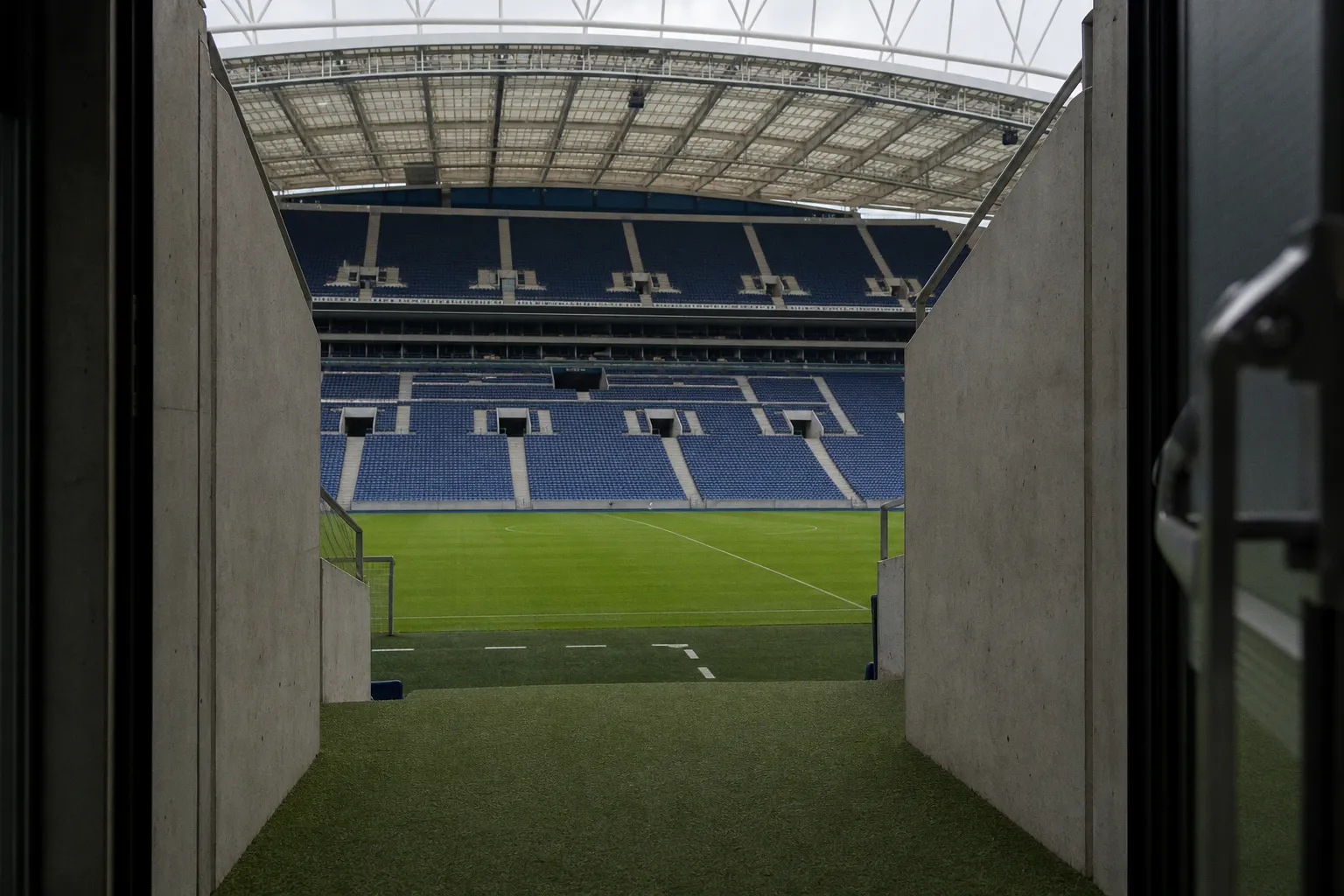
Every FC Porto stadium tour begins with a single logistical reality that catches out almost every first-time visitor: the stadium portion of the official Tour FC Porto is unavailable on match days, on the eve of UEFA fixtures, and during scheduled pitch events. The museum remains open through most of those windows, but the circuit through the stadium is suspended. Travelling supporters who arrive without checking the club's fixture calendar often leave with a half-experience and no easy remedy — and during a Champions League week, that single constraint reshapes an entire Porto trip.
That is the operational hinge on which the entire visit rotates. Everything else — ticket tiers, opening hours, the museum's 27 thematic areas, the six audio-guide languages — is comparatively straightforward by stadium-tour standards. What follows is a factual breakdown of the FC Porto stadium tour: what it delivers, where the practical friction sits, and how a visiting supporter should plan around it.
The dual experience: one ticket, two distinct modes of visiting
The Tour FC Porto is sold as a single combined product, but in practice it is two different kinds of visit fused into one ticket. The FC Porto Museum component is self-guided: visitors move through the exhibits at their own pace, with the option of a multilingual audio guide. The Estádio do Dragão stadium component is non-guided but accompanied — a Museum team member walks the group through the circuit, while the visitor's role is to follow and observe rather than listen to a conventional narrated tour.
That distinction matters, and it is the first thing a first-time visitor tends to misread. Visitors expecting a fully guided, headset-equipped stadium tour will arrive with the wrong mental model; visitors expecting the museum to be a quick walk-through will under-budget their time. The two halves sit at different points on the spectator-experience hierarchy: the museum is contemplative, the stadium circuit is kinetic, built around physical proximity to the playing surface, the technical area and the dressing-room approach.
A single ticket covers both. The transition between the two happens on the day, at the Museum reception, where the stadium-visit slot is allocated in person — and where any change of plan, late arrival or operational curtailment is communicated directly to the visitor. That single moment — walking up to the reception desk and asking for the next available stadium slot — is where most visitor expectations either hold up or quietly collapse.
Navigating the stadium circuit: what the route actually includes
The official tour page describes the stadium circuit as covering the stands and technical areas, the dugout, and the away-team dressing-room area. Beyond those listed elements, the precise sequence and the specific rooms included can vary: dressing-room access is explicitly stated as subject to operational conditions, and the route as a whole can be changed or cancelled on the day depending on capacity and pitch activity.
What that means in practice is that the stadium portion of the visit is best understood as a controlled walk whose details are settled on the day, not in advance. A visiting supporter walking the circuit on two separate visits a week apart may find broadly similar geography — the seating bowl, the touchline, the dressing-room approach — but the access list around them, including the tunnel, the press areas, the mixed zone and the specific dressing-room entry, is not contractually fixed. The official information is explicit on this point, and any visitor building expectations around specific rooms should treat those rooms as bonus, not baseline.
The stadium circuit is best understood as a controlled walk. The published route is a starting point; the operational conditions of the day determine what is actually open.
The hierarchy of the experience, then, runs from the parts of the stadium most consistently included — the seating bowl, the technical areas, the dugout vantage — down through the rooms and approaches that sit most exposed to the club's match-preparation schedule. Travelling supporters who have watched Dragão fill on a European night will recognise the touchline architecture immediately if the circuit reaches the technical area on the day. The tour is at its strongest when it traces the same geography the players occupy on a matchday; that geography is, however, framed rather than fixed, and visitors reading fixture-week reviews should understand that the strongest version of the route is the one the club can confirm at reception, not the one described in advance.
Planning your visit: ticket pricing and age categories
Pricing for the general-public tour is structured by age band, and the bands are tighter than at many comparable European stadium visits. The headline adult ticket, for visitors aged 13 to 64, is listed at €25. Seniors aged 65 and over pay €20. Children aged 5 to 12 pay €13, and children aged 0 to 4 are admitted free, provided an adult ticket is presented and the child is accompanied by an adult. The 0–4 admission is not a standalone ticket; it sits alongside a paying adult in the same booking logic.
The audio guide, where offered, is shown as a €5 supplement on the adult ticket product page. The listed pricing should be treated as the current published rate rather than a permanent fixture: the club's booking system can revise figures, and visitors planning around a specific budget should recheck the official tour page in the days before travel.
| Category | Age band | Listed price |
|---|---|---|
| Adult | 13–64 | €25 |
| Senior | 65+ | €20 |
| Child | 5–12 | €13 |
| Infant | 0–4 | Free (with adult ticket) |
| Audio guide supplement | All ages | €5 |
For travelling fans, the age bands carry one practical consequence that is easy to miss at the booking stage. A family with two adults and two children aged 10 and 14 will not pay a simple 2×€25 + 2×€13 — the 14-year-old crosses into the adult tier. A family with one infant under five effectively pays only for the accompanying adult, but that adult still has to be present at the museum reception to convert the admission into a stadium slot. Anyone planning a family visit should work the math from the table above before committing to a travel date, not after.
Operational constraints: match days, UEFA eves, and the sequencing that works
This is the section that decides whether the visit works at all. The Tour FC Porto stadium component is unavailable on FC Porto match days, on the day before UEFA matches, and during certain major pitch events. The museum typically remains open on those days, but the stadium circuit is suspended, and the suspended window can stretch from the afternoon before a Champions League fixture through to late evening on the match day itself.
The official tour page lists stadium-visit slots on Mondays at 3:00 PM, 4:00 PM and 5:00 PM, and from Tuesday to Sunday at hourly intervals from 11:00 AM to 5:00 PM. Those slots are the published framework, not a guarantee: the official information states that the route is subject to maximum capacity and operational changes, and the museum reception controls slot allocation on the day.
The consequence is that a visitor cannot reliably fix a stadium-tour time in advance through the booking system. The slot is arranged at the Museum reception on the day of the visit, subject to availability. This is a deliberate operational choice — it lets the club absorb late fixture changes, weather decisions, and pitch events — but for a travelling supporter who has built a Porto itinerary around the tour, it is the single biggest source of friction.
The stadium slot is allocated on the day, at the museum reception, and is subject to capacity. Advance planning determines the visit; same-day planning determines the route.
The museum itself has its own published hours, which are broader than the stadium-slot windows: Monday 2:30 PM to 7:00 PM, and Tuesday to Sunday 10:00 AM to 7:00 PM. The museum is closed on December 25 and January 1, with early closing on December 24 (3:00 PM) and December 31 (4:00 PM). On a typical non-matchday weekday, a visitor arriving at museum opening can expect to clear the museum and reach the reception desk in time for an early-afternoon slot. On a European week, that same plan can collapse without warning.
For visitors with a single day in Porto, the sequencing that consistently works is this:
1. Arrive at the museum within the first hour of opening to maximise the museum window.
2. Clear the 27 thematic areas at a deliberate pace, taking the audio guide in a preferred language.
3. Convert to the stadium slot at the Museum reception before the midday turnover.
4. Aim for an early-afternoon stadium departure, leaving contingency for an alternative slot.
The total visit — museum plus stadium circuit, on a day when both run — is estimated at 90 minutes to two hours. That estimate assumes a non-matchday with a confirmed stadium slot; on a constrained day, the museum half can absorb the full window, and the stadium half effectively drops away. Visitors who reverse the order — stadium first, museum second — routinely find that a delayed or compressed stadium slot eats into the museum window, and the museum, with its 27 areas and multilingual audio, is the half of the visit that rewards unhurried attention.
Exploring the museum: 27 thematic areas and six audio-guide languages
The FC Porto Museum is structured around 27 thematic areas distributed across exhibitions that trace the club's history, silverware and playing identity. The audio guide is offered in six languages — Portuguese, English, French, Spanish, German and Italian — covering the bulk of the international supporter base that travels to Estádio do Dragão across a European season.
The museum is the half of the visit that international fans consistently under-rate. Stadium tours elsewhere tend to dominate the marketing and the souvenir photography, but at Dragão the museum carries a disproportionate share of the institutional memory: the trophies, the shirts, the photographs of title-winning sides, the European nights that shaped the modern club. Visiting supporters who treat the museum as a 20-minute pause before the stadium circuit routinely leave with the inverted experience — they remember the museum more vividly than the rest of the visit.
That is partly a function of pacing. The stadium circuit moves quickly, dictated by the group dynamic and the operational clock; the museum, by contrast, lets the visitor linger. A supporter with a specific interest in a particular Porto era — the 2003–04 Champions League campaign, the post-2011 domestic hierarchy, the youth production line — can spend disproportionate time on those sections without falling behind a guide. The audio guide, in six languages, makes that depth accessible without a working knowledge of Portuguese, which is the single biggest advantage the museum offers over comparable stadium tours in southern Europe.
Stadium atmosphere: what the tour captures, and what it does not
For a fan reading this with one eye on a future matchday visit, it is worth saying plainly what the Tour FC Porto delivers and what it does not. On a fully-operational day, the tour offers proximity to the dugout, the technical area, and the dressing-room approach that the players occupy on a matchday, along with the geometry of the stadium in a calm, controlled state — empty seats, quiet concourses, no crowd attrition to navigate, no away-end choreography to negotiate.
What the tour does not deliver is atmosphere. Estádio do Dragão on a European night is a different building entirely: the south stand in full voice, the organised supporter choreography, the press-box temperature that rises with each substitution. None of that survives into the tour circuit, and no tour format at any stadium in Europe can reproduce it. The Tour FC Porto is the skeleton of the matchday; the matchday itself is the muscle, the heartbeat and the noise layered on top.
For travelling supporters planning a season trip around a Porto fixture, that distinction is the practical takeaway. The tour and the matchday are complementary, not substitutable — and on a weekend when Porto plays at home, the stadium portion of the tour is, by definition, unavailable. A Porto trip built around a single fixture should treat the museum half of the tour as an optional bonus, not the spine.
Author's position
The Tour FC Porto is one of the more operationally honest stadium visits in European football. It does not oversell dressing-room access, does not promise the home changing room, and is explicit that the stadium circuit can be changed or cancelled on the day. That transparency is rare, and it is the reason the tour remains a credible recommendation for travelling fans despite the friction of same-day slot allocation.
The friction itself is not a flaw. It is the cost of running a tour inside a working stadium that hosts Primeira Liga football, UEFA competition, and the occasional institutional event. Visitors who treat the slot as flexible rather than fixed, who arrive early, who build their Porto day around the museum first and the stadium second, will leave with the closest version of the visit the club intends to sell. Visitors who fix the stadium slot in advance and build their itinerary around it will not — and that gap between expectation and on-the-ground operational reality is, in the end, the most Porto thing about the entire experience.